
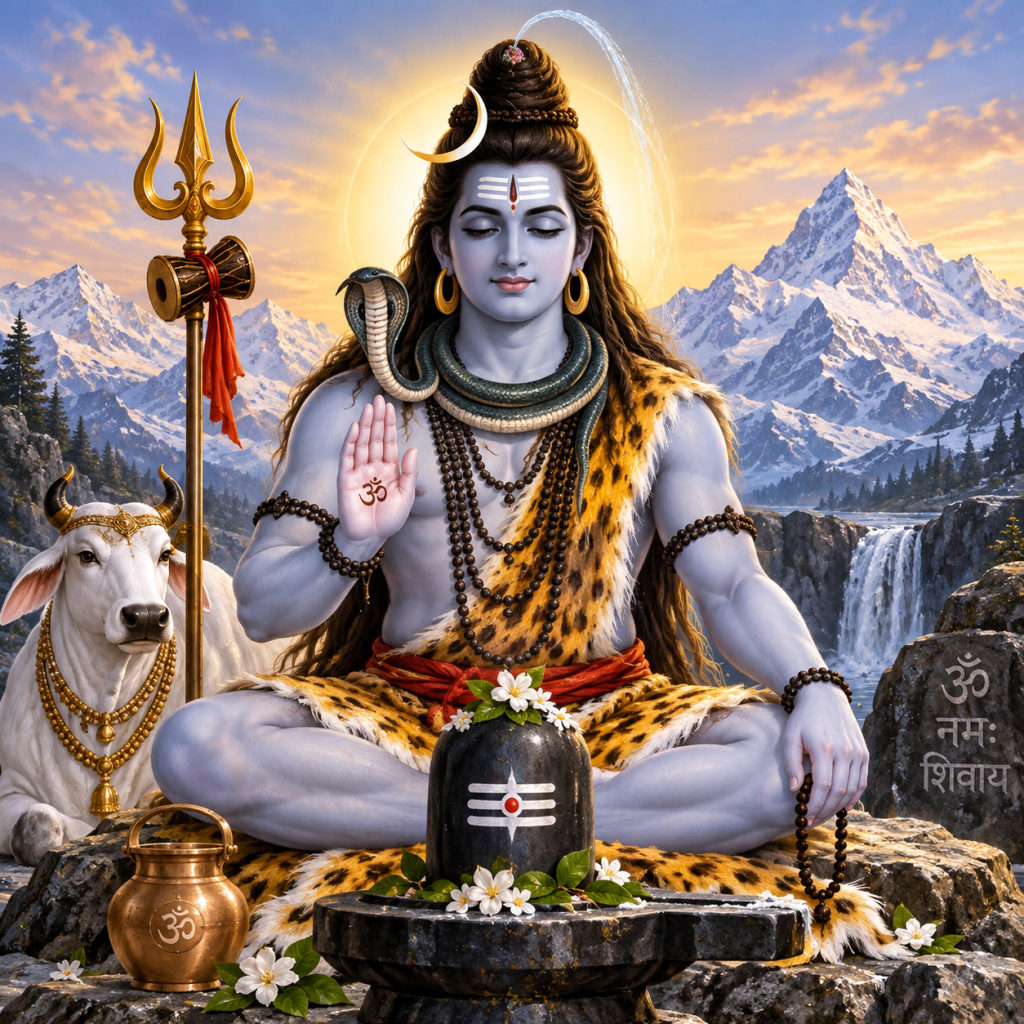
Shri Shiva Mangalashtakam (श्री शिवमङ्गलाष्टकम्) is traditionally recited for मंगल (auspiciousness) and divine blessings. It can be recited during daily prayer, Shiva Puja, or on occasions such as Monday, Maha Shivaratri, Pradosh Vrat and other auspicious occasions dedicated to Lord Shiva.
Shiva Mangal ashtakam
श्री शिवमङ्गलाष्टकम्

भवाय चन्द्रचूडाय निर्गुणाय गुणात्मने ।
कालकालाय रुद्राय नीलग्रीवाय मङ्गलम् ॥ १ ॥
वृषारूढाय भीमाय व्याघ्रचर्माम्बराय च ।
पशूनां पतये तुभ्यं गौरीकान्ताय मङ्गलम् ॥ २ ॥
भस्मोद्धूलितदेहाय व्यालयज्ञोपवीतिने ।
रुद्राक्षमालाभूषाय व्योमकेशाय मङ्गलम् ॥ ३ ॥
सूर्यचन्द्राग्निनेत्राय नमः कैलासवासिने ।
सच्चिदानन्दरूपाय प्रमथेशाय मङ्गलम् ॥ ४ ॥
मृत्युंजयाय सांबाय सृष्टिस्थित्यन्तकारिणे ।
त्र्यंबकाय सुशान्ताय त्रिलोकेशाय मङ्गलम् ॥ ५ ॥
गंगाधराय सोमाय नमो हरिहरात्मने ।
उग्राय त्रिपुरघ्नाय वामदेवाय मङ्गलम् ॥ ६ ॥
सद्योजाताय शर्वाय दिव्यज्ञानप्रदायिने ।
ईशानाय नमस्तुभ्यं पञ्चवक्त्राय मङ्गलम् ॥ ७ ॥
सदाशिवस्वरूपाय नमस्तत्पुरुषाय च ।
अघोरायच घोराय महादेवाय मङ्गलम् ॥ ८ ॥
मङ्गलाष्टकमेतद्वै शंभोर्यः कीर्तयेद्दिने ।
तस्य मृत्युभयं नास्ति रोगपीडाभयं तथा ॥ ९ ॥
About Shri Shiva Mangalashtakam
Shri Shiva Mangalashtakam Stotram, is a Sanskrit devotional hymn in praise of Lord Shiva. The word Mangalashtakam refers to an Ashtakam associated with मंगल, or auspiciousness.
The eight verses praise Lord Shiva through different names, forms and divine attributes. He is described as Chandrachuda, Rudra, Neelagriva, Pashupati, Gangadhara, Tryambaka, Vamadeva, Sadashiva and Mahadeva, among other names.
The verses also describe important aspects associated with Lord Shiva, including his matted hair, crescent moon, Ganga, third eye, sacred ash, Rudraksha, tiger skin and residence at Mount Kailash.
Importance / Significance of Shiva Mangalashtakam
The significance of Shiva Mangalashtakam lies in its repeated invocation of auspiciousness through the names and forms of Lord Shiva.
Each verse presents different attributes of Shiva. The hymn refers to Shiva as Rudra, Pashupati, Gangadhara, Tryambaka, Vamadeva, Ishana, Sadashiva and Mahadeva, among other divine forms.
The verses also connect Lord Shiva with creation, preservation and dissolution, divine knowledge, spiritual consciousness and protection.
Because the hymn repeatedly concludes its verses with “मङ्गलम्”, meaning auspiciousness or blessing, it is traditionally regarded as a prayer seeking मंगल and divine grace.
Shiva Mangalashtakam Puja Samagri
For a simple Shiva Puja, commonly used items may include:
- Shiva Lingam or image of Lord Shiva
- Clean water
- Bilva leaves
- Flowers
- Diya
- Incense
- Sandalwood paste
- Akshata (rice)
- Fruits or other traditional offerings
Not every item is necessary for simply reciting the Mangalashtakam. The hymn can also be recited as part of a simple daily prayer.
Shiva Mangalashtakam Path / Puja Vidhi
A simple way to include Shiva Mangalashtakam in Shiva Puja is:
- Take a bath and wear clean clothes.
- Clean the place of worship.
- Place an image or Shiva Lingam of Lord Shiva.
- Light a diya and incense if desired.
- Offer water to Lord Shiva according to your tradition.
- Offer flowers, Bilva leaves and other suitable offerings.
- Sit peacefully before Lord Shiva.
- Begin with a prayer or mantra such as Om Namah Shivaya.
- Recite Shri Shiva Mangalashtakam with concentration.
- Complete the prayer with your preferred Shiva mantra or devotional prayer.
The exact Puja Vidhi can vary according to family tradition and regional practices.
Shiva Mangalashtakam Benefits
According to traditional devotional belief, reciting Shiva Mangalashtakam with श्रद्धा and devotion is associated with auspiciousness and spiritual well-being.
Some traditionally described benefits include:
- Seeking Lord Shiva’s blessings and divine grace.
- Promoting a devotional and peaceful state of mind.
- Seeking protection from difficulties and negative influences.
- Supporting regular Shiva worship and spiritual practice.
- Developing devotion, concentration and remembrance of Lord Shiva.
- The concluding Phalashruti traditionally describes freedom from fear of death and illness-related suffering.
These benefits belong to the traditional devotional understanding of the hymn and should not be considered medical or scientifically proven claims.
When to Read Shiva Mangalashtakam
Shiva Mangalashtakam can be recited during:
- Daily morning or evening prayer.
- Shiva Puja.
- Monday worship dedicated to Lord Shiva.
- Maha Shivaratri.
- Pradosh Vrat.
- Other auspicious occasions or personal devotional practices.
It may also be recited when a devotee wishes to begin the day with remembrance and prayer to Lord Shiva.
How Many Times to Read Shiva Mangalashtakam
For daily prayer, devotees may recite Shiva Mangalashtakam once.
Those following a specific spiritual practice may recite it multiple times according to their tradition or personal devotional routine.
There is no need to force a particular number of repetitions if you are simply including the hymn in your regular prayer.
Best Day / Auspicious Occasions
Monday
Monday, or Somvar, is traditionally associated with Lord Shiva. Devotees commonly perform Shiva Puja and recite Shiva Stotram and other Shiva prayers on this day.
Maha Shivaratri
Maha Shivaratri is one of the most important festivals dedicated to Lord Shiva. Devotees observe prayers, worship and devotional practices throughout the day and night.
Pradosh Vrat
Pradosh is a traditional period associated with Shiva worship. Shiva Mangalashtakam can be included as part of the devotional prayers performed during Pradosh.
Best Time to Read Shiva Mangalashtakam
There is no single mandatory time mentioned in the verses you provided for reciting Shiva Mangalashtakam.
For regular devotional practice, it can be recited during the morning after bathing and completing daily routines, or in the evening during Shiva Puja.
On special occasions such as Maha Shivaratri, devotees may include it as part of their nighttime worship.
The most important aspect is to recite the hymn with concentration, श्रद्धा and devotion.
Shiva Mangalashtakam Phalashruti
The ninth and concluding verse is the Phalashruti:
मङ्गलाष्टकमेतद्वै शंभोर्यः कीर्तयेद्दिने ।
तस्य मृत्युभयं नास्ति रोगपीडाभयं तथा ॥ ९ ॥
According to the traditional Phalashruti, a person who recites this Mangalashtakam of Shambhu daily is said to have freedom from the fear of death and fear of illness.
Shiva Mangalashtakam Video
FAQs About Shiva Mangalashtakam
What is Shiva Mangalashtakam?
Shiva Mangalashtakam is a Sanskrit devotional hymn dedicated to Lord Shiva. It contains eight principal verses praising different names, forms and attributes of Lord Shiva, followed by a concluding Phalashruti.
How many verses are there in Shiva Mangalashtakam?
Shiva Mangalashtakam has eight principal verses followed by a ninth concluding verse that serves as the Phalashruti.
Can Shiva Mangalashtakam be recited daily?
Yes. Devotees may include Shiva Mangalashtakam in their daily prayer or regular Shiva worship.
Can Shiva Mangalashtakam be recited on Monday?
Yes. Monday is traditionally associated with Lord Shiva, making it a suitable day for Shiva worship and recitation of Shiva devotional hymns.
Can Shiva Mangalashtakam be recited on Maha Shivaratri?
Yes. Shiva Mangalashtakam can be included in devotional prayers and Shiva Puja performed during Maha Shivaratri.
What is the meaning of Mangalashtakam?
Mangalashtakam can be understood as an Ashtakam associated with Mangal, meaning auspiciousness, blessing or well-being. The verses invoke auspiciousness through praise of Lord Shiva.