
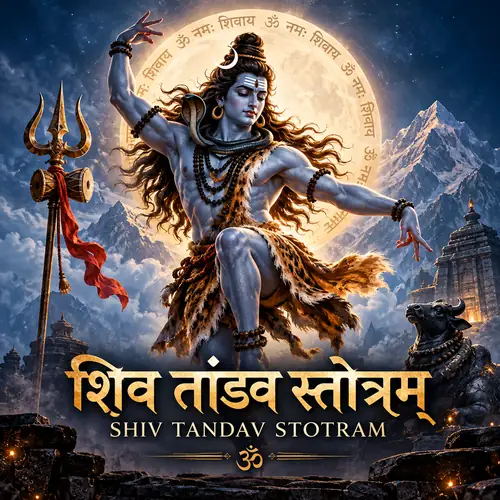
Shiv Tandav Stotram is a Sanskrit hymn traditionally attributed to Ravana, describing the majesty, fierce energy and divine beauty of Lord Shiva. It is especially recited during Pradosh worship, in the evening, or at the end of Shiva Puja.
Shiv Tandav Stotram
शिव तांडव स्तोत्रम्

जटाटवीगलज्जलप्रवाहपावितस्थले
गलेऽवलम्ब्य लम्बितां भुजङ्गतुङ्गमालिकाम् ।
डमड्डमड्डमड्डमन्निनादवड्डमर्वयं
चकार चण्डताण्डवं तनोतु नः शिवः शिवम् ॥१॥
जटाकटाहसम्भ्रमभ्रमन्निलिम्पनिर्झरी
विलोलवीचिवल्लरीविराजमानमूर्धनि ।
धगद्धगद्धगज्ज्वलल्ललाटपट्टपावके
किशोरचन्द्रशेखरे रतिः प्रतिक्षणं मम ॥२॥
धराधरेन्द्रनंदिनीविलासबन्धुबन्धुर
स्फुरद्दिगन्तसन्ततिप्रमोदमानमानसे ।
कृपाकटाक्षधोरणीनिरुद्धदुर्धरापदि
क्वचिद्दिगम्बरे(क्वचिच्चिदम्बरे) मनो विनोदमेतु वस्तुनि ॥३॥
जटाभुजङ्गपिङ्गलस्फुरत्फणामणिप्रभा
कदम्बकुङ्कुमद्रवप्रलिप्तदिग्वधूमुखे ।
मदान्धसिन्धुरस्फुरत्त्वगुत्तरीयमेदुरे
मनो विनोदमद्भुतं बिभर्तु भूतभर्तरि ॥४॥
सहस्रलोचनप्रभृत्यशेषलेखशेखर
प्रसूनधूलिधोरणी विधूसराङ्घ्रिपीठभूः ।
भुजङ्गराजमालया निबद्धजाटजूटक
श्रियै चिराय जायतां चकोरबन्धुशेखरः ॥५॥
ललाटचत्वरज्वलद्धनञ्जयस्फुलिङ्गभा
निपीतपञ्चसायकं नमन्निलिम्पनायकम् ।
सुधामयूखलेखया विराजमानशेखरं
महाकपालिसम्पदेशिरोजटालमस्तु नः ॥६॥
करालभालपट्टिकाधगद्धगद्धगज्ज्वल
द्धनञ्जयाहुतीकृतप्रचण्डपञ्चसायके ।
धराधरेन्द्रनन्दिनीकुचाग्रचित्रपत्रक
प्रकल्पनैकशिल्पिनि त्रिलोचने रतिर्मम ॥७॥
नवीनमेघमण्डली निरुद्धदुर्धरस्फुरत्
कुहूनिशीथिनीतमः प्रबन्धबद्धकन्धरः ।
निलिम्पनिर्झरीधरस्तनोतु कृत्तिसिन्धुरः
कलानिधानबन्धुरः श्रियं जगद्धुरंधरः ॥८॥
प्रफुल्लनीलपङ्कजप्रपञ्चकालिमप्रभा
वलम्बिकण्ठकन्दलीरुचिप्रबद्धकन्धरम् ।
स्मरच्छिदं पुरच्छिदं भवच्छिदं मखच्छिदं
गजच्छिदांधकच्छिदं तमन्तकच्छिदं भजे ॥९॥
अगर्व सर्वमङ्गलाकलाकदम्बमञ्जरी
रसप्रवाहमाधुरी विजृम्भणामधुव्रतम् ।
स्मरान्तकं पुरान्तकं भवान्तकं मखान्तकं
गजान्तकान्धकान्तकं तमन्तकान्तकं भजे ॥१०॥
जयत्वदभ्रविभ्रमभ्रमद्भुजङ्गमश्वस
द्विनिर्गमत्क्रमस्फुरत्करालभालहव्यवाट् ।
धिमिद्धिमिद्धिमिध्वनन्मृदङ्गतुङ्गमङ्गल
ध्वनिक्रमप्रवर्तित प्रचण्डताण्डवः शिवः ॥११॥
दृषद्विचित्रतल्पयोर्भुजङ्गमौक्तिकस्रजोर्
गरिष्ठरत्नलोष्ठयोः सुहृद्विपक्षपक्षयोः ।
तृणारविन्दचक्षुषोः प्रजामहीमहेन्द्रयोः
समं प्रव्रितिक: कदा सदाशिवं भजाम्यहम ॥१२॥
कदा निलिम्पनिर्झरीनिकुञ्जकोटरे वसन्
विमुक्तदुर्मतिः सदा शिरः स्थमञ्जलिं वहन् ।
विमुक्तलोललोचनो ललामभाललग्नकः
शिवेति मंत्रमुच्चरन् कदा सुखी भवाम्यहम् ॥१३॥
निलिम्प नाथनागरी कदम्ब मौलमल्लिका-
निगुम्फनिर्भक्षरन्म धूष्णिकामनोहरः ।
तनोतु नो मनोमुदं विनोदिनींमहनिशं
परिश्रय परं पदं तदङ्गजत्विषां चयः ॥१४॥
प्रचण्ड वाडवानल प्रभाशुभप्रचारणी
महाष्टसिद्धिकामिनी जनावहूत जल्पना ।
विमुक्त वाम लोचनो विवाहकालिकध्वनिः
शिवेति मन्त्रभूषगो जगज्जयाय जायताम् ॥१५॥
इमं हि नित्यमेवमुक्तमुत्तमोत्तमं स्तवं
पठन्स्मरन्ब्रुवन्नरो विशुद्धिमेतिसंततम् ।
हरे गुरौ सुभक्तिमाशु याति नान्यथा गतिं
विमोहनं हि देहिनां सुशङ्करस्य चिंतनम् ॥१६॥
पूजावसानसमये दशवक्त्रगीतं
यः शम्भुपूजनपरं पठति प्रदोषे ।
तस्य स्थिरां रथगजेन्द्रतुरङ्गयुक्तां
लक्ष्मीं सदैव सुमुखिं प्रददाति शम्भुः ॥१७॥
इति श्रीरावण कृतम्
शिव ताण्डव स्तोत्रम्स म्पूर्णम्
Meaning of Shiv Tandav Stotram
Shiv Tandav Stotram is an elaborate praise of Lord Shiva’s Tandava, his cosmic dance that represents divine energy, transformation and the dynamic nature of creation.
The opening verses vividly describe Shiva’s form: Ganga flowing through his matted hair, the crescent moon adorning his head, serpents around his neck, fire blazing from his forehead and the sound of the damaru accompanying his powerful dance.
The hymn gradually moves beyond Shiva’s physical form and praises his deeper qualities. It describes him as the destroyer of desire, Tripura, worldly bondage and evil forces, while also emphasizing his compassion and auspicious nature.
One of the most significant verses is verse 12, where the devotee expresses a desire to develop equal-mindedness toward opposites such as a precious jewel and a lump of earth, friend and enemy, and ordinary person and king. This gives the Stotram a philosophical dimension beyond its powerful imagery.
The Stotram can therefore be recited to deepen devotion to Shiva, cultivate inner steadiness and purity, and meditate on his strength, compassion and transformative nature. Verse 16 specifically describes regular recitation as leading toward purification, devotion to Shiva and freedom from delusion.
Importance of Shiv Tandav Stotram
The hymn is traditionally attributed to Ravana, the ten-headed king of Lanka and devotee of Lord Shiva, as indicated by its concluding verse, “Iti Shri Ravana Kritam Shiva Tandava Stotram.”
There are different textual recensions of the Stotram. This version contains 17 verses, including two verses that appear in the extended recension. Sanskrit Documents notes that some versions contain 15–19 verses.
The first 15 verses of the extended version use the Panchachamara metre, giving the hymn its distinctive rapid, rhythmic sound that complements its description of Shiva’s Tandava. The concluding verse uses a different metre, Vasantatilaka.
Benefits of Reciting Shiv Tandav Stotram
- Deepen devotion toward Lord Shiva
- Cultivate inner strength and steadiness
- Seek purification of thoughts and actions
- Overcome confusion and mental delusion
- Develop greater detachment and equanimity
- Meditate on Shiva’s powerful and transformative nature
- Seek Shiva’s grace and auspiciousness
- Maintain regular remembrance of Shiva through prayer
Verse 16 specifically associates regular reading, remembrance and recitation with purification, devotion to Shiva and freedom from delusion.
Best Time to Recite
- Pradosh Kaal, especially after Shiva Puja
- Pradosh Vrat
- Monday evening
- Evening Shiva worship
- The end of a regular Shiva Puja
- Any convenient time for daily devotional recitation
Phalashruti
Verse 16 says that a person who regularly reads, remembers and recites this supreme hymn attains purification, develops devotion toward Shiva and moves beyond delusion.
Verse 17 specifically states that one who recites the hymn at the conclusion of Shiva worship during Pradosh receives the grace of Shambhu and enduring Lakshmi, expressed through imagery of prosperity and abundance.