
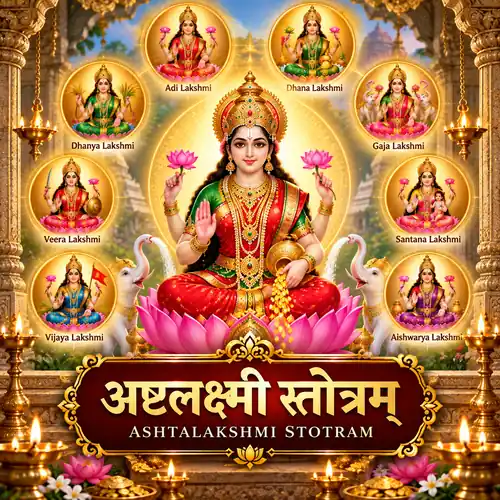
Ashtalakshmi Stotram glorifies the eight forms of Goddess Lakshmi and is recited during worship, especially on Fridays, Diwali, Navratri and other auspicious occasions, in the morning or evening to seek her grace for abundance, wisdom, courage, success and family harmony.
Ashtalakshmi Stotram
अष्टलक्ष्मी स्तोत्रम्

॥ आदिलक्ष्मि ॥
सुमनस वन्दित सुन्दरि माधवि,चन्द्र सहोदरि हेममये
मुनिगणमण्डित मोक्षप्रदायनि,मञ्जुळभाषिणि वेदनुते।
पङ्कजवासिनि देवसुपूजित,सद्गुण वर्षिणि शान्तियुते
जय जय हे मधुसूदन कामिनि,आदिलक्ष्मि सदा पालय माम्॥१॥
॥ धान्यलक्ष्मि ॥
अहिकलि कल्मषनाशिनि कामिनि,वैदिकरूपिणि वेदमये
क्षीरसमुद्भव मङ्गलरूपिणि,मन्त्रनिवासिनि मन्त्रनुते।
मङ्गलदायिनि अम्बुजवासिनि,देवगणाश्रित पादयुते
जय जय हे मधुसूदन कामिनि,धान्यलक्ष्मि सदा पालय माम्॥२॥
॥ धैर्यलक्ष्मि ॥
जयवरवर्णिनि वैष्णवि भार्गवि,मन्त्रस्वरूपिणि मन्त्रमये
सुरगणपूजित शीघ्रफलप्रद,ज्ञानविकासिनि शास्त्रनुते।
भवभयहारिणि पापविमोचनि,साधुजनाश्रित पादयुते
जय जय हे मधुसूधन कामिनि,धैर्यलक्ष्मी सदा पालय माम्॥३॥
॥ गजलक्ष्मि ॥
जय जय दुर्गतिनाशिनि कामिनि,सर्वफलप्रद शास्त्रमये
रधगज तुरगपदाति समावृत,परिजनमण्डित लोकनुते।
हरिहर ब्रह्म सुपूजित सेवित,तापनिवारिणि पादयुते
जय जय हे मधुसूदन कामिनि,गजलक्ष्मी रूपेण पालय माम्॥४॥
॥ सन्तानलक्ष्मि ॥
अहिखग वाहिनि मोहिनि चक्रिणि,रागविवर्धिनि ज्ञानमये
गुणगणवारिधि लोकहितैषिणि,स्वरसप्त भूषित गाननुते।
सकल सुरासुर देवमुनीश्वर,मानववन्दित पादयुते
जय जय हे मधुसूदन कामिनि,सन्तानलक्ष्मी त्वं पालय माम्॥५॥
॥ विजयलक्ष्मि ॥
जय कमलासनि सद्गतिदायिनि,ज्ञानविकासिनि गानमये
अनुदिनमर्चित कुङ्कुमधूसर,भूषित वासित वाद्यनुते।
कनकधरास्तुति वैभव वन्दित,शङ्कर देशिक मान्य पदे
जय जय हे मधुसूदन कामिनि,विजयलक्ष्मी सदा पालय माम्॥६॥
॥ विद्यालक्ष्मि ॥
प्रणत सुरेश्वरि भारति भार्गवि,शोकविनाशिनि रत्नमये
मणिमयभूषित कर्णविभूषण,शान्तिसमावृत हास्यमुखे।
नवनिधिदायिनि कलिमलहारिणि,कामित फलप्रद हस्तयुते
जय जय हे मधुसूदन कामिनि,विद्यालक्ष्मी सदा पालय माम्॥७॥
॥ धनलक्ष्मि ॥
धिमिधिमि धिंधिमि धिंधिमि-धिंधिमि,दुन्दुभि नाद सुपूर्णमये
घुमघुम घुङ्घुम घुङ्घुम घुङ्घुम,शङ्खनिनाद सुवाद्यनुते।
वेदपूराणेतिहास सुपूजित,वैदिकमार्ग प्रदर्शयुते
जय जय हे मधुसूदन कामिनि,धनलक्ष्मि रूपेणा पालय माम्॥८॥
Meaning of Ashtalakshmi Stotram and Why Perform It
Ashtalakshmi Stotram is a devotional hymn dedicated to the eight forms of Goddess Lakshmi, collectively known as Ashtalakshmi. Each form represents a different aspect of abundance and well-being, including the blessings associated with the beginning of life, food and nourishment, courage, victory, knowledge, family, wealth and prosperity.
The Stotram praises Goddess Lakshmi as the divine consort of Lord Vishnu and seeks her blessings for peace, prosperity, wisdom, courage, success and overall well-being. Devotees recite it as an expression of faith and devotion and to remember the different forms of abundance represented by the eight Lakshmis.
The Eight Forms of Lakshmi
- Adi Lakshmi – associated with spiritual strength and the eternal aspect of Lakshmi.
- Dhanya Lakshmi – associated with food, nourishment and agricultural abundance.
- Dhairya Lakshmi – associated with courage, strength and confidence.
- Gaja Lakshmi – associated with prosperity, royal abundance and well-being.
- Santana Lakshmi – associated with family and children.
- Vijaya Lakshmi – associated with victory and success.
- Vidya Lakshmi – associated with knowledge, learning and wisdom.
- Dhana Lakshmi – associated with wealth and material prosperity.
Festivals and Auspicious Occasions
Ashtalakshmi Stotram can be included in worship during:
- Diwali / Deepavali, especially during Lakshmi Puja
- Dhanteras
- Navratri
- Varalakshmi Vratam
- Fridays dedicated to Goddess Lakshmi
- Morning, after bathing and completing daily preparations
- Evening, during Lakshmi Puja and after lighting a diya
- Other Lakshmi Puja and auspicious family occasions
The Stotram may be recited with a clean and peaceful mind, a lit diya, flowers and other simple offerings according to one’s family or regional worship practices.