
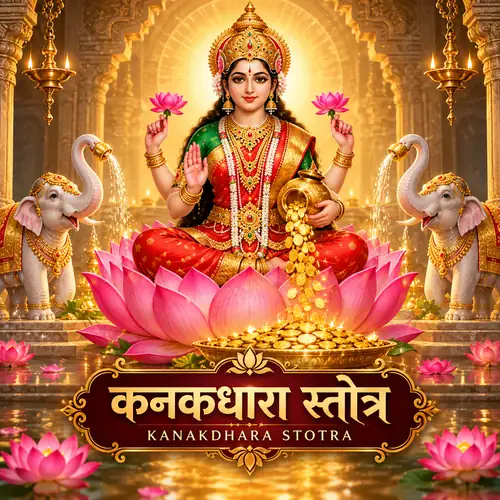
Kanakadhara Stotra is especially recited on Fridays, during Lakshmi Puja; composed in praise of Goddess Lakshmi and her compassionate glance, auspiciousness and divine presence.
कनकधारा स्तोत्र
Kanakadhara Stotra

ध्यान
ॐ वन्दे वन्दारु मन्दार मिन्दीरानन्द कल्दलं।
अमंदानन्द सन्दोह बन्धुरं सिंधुराननं ।।
ॐ अङ्गं हरै ( हरेः) पुलकभूषणमाश्रयन्ती भृङ्गाऽगनेव मुकुलाभरणं तमालं |
अंगीकृताऽखिलविभूतिरपाँगलीलामाँगल्यदाऽस्तु मम् मङ्गलदेवतायाः || १ ||
मुग्धा मुहुर्विदधी वदने मुरारेः प्रेमत्रपा प्रणिहितानि गताऽगतानि |
मलार्दशोर्मधुकरीव महोत्पले या सा में श्रियं दिशतु सागर सम्भवायाः || २ ||
विश्वामरेन्द्र पदविभ्रमदानदक्षमानन्दहेतुरधिकं मुरविद्विषोपि |
ईषन्निषीदतु मयि क्षण मीक्षणार्धंमिन्दीवरोदर सहोदरमिन्दीरायाः || ३ ||
आमीलिताक्षमधिगम्य मुदामुकुन्दमानन्द कंदमनिमेषमनंगतन्त्रं |
आकेकर स्थित कनीतिकपद्मनेत्रं भूत्यै भवेन्मम भुजङ्ग शयाङ्गनायाः || ४ ||
बाह्यन्तरे मुरजितः(मधुजितः) श्रुतकौस्तुभे या हारावलीव हरिनीलमयी विभाति |
कामप्रदा भगवतोऽपि कटाक्षमाला कल्याणमावहतु में कमलालयायाः || ५ ||
कालाम्बुदालि ललितोरसि कैटभारेर्धाराधरे स्फुरति या तडिदंगनेव |
मातुः समस्तजगतां महनीयमूर्तिर्भद्राणि में दिशतु भार्गवनंदनायाः || ६ ||
प्राप्तं पदं प्रथमतः किल यत प्रभावान्मांगल्यभाजि मधुमाथिनी मन्मथेन |
मय्यापतेत्तदिह मन्थरमीक्षणार्धं मन्दालसं च मकरालयकन्यकायाः || ७ ||
दद्याद दयानुपवनो द्रविणाम्बुधारामस्मिन्नकिञ्चन विहङ्गशिशो विषण्णे |
दुष्कर्मधर्ममपनीय चिराय दूरं नारायणप्रणयिनीनयनाम्बुवाहः || ८ ||
इष्टाविषिश्टमतयोऽपि यया दयार्द्रदृष्टया त्रिविष्टपपदं सुलभं लभन्ते |
दृष्टिः प्रहष्टकमलोदरदीप्तिरिष्टां पुष्टिं कृषीष्ट मम पुष्करविष्टरायाः || ९ ||
गीर्देवतेति गरुड़ध्वजसुन्दरीति शाकम्भरीति शशिशेखरवल्लभेति |
सृष्टिस्थितिप्रलयकेलिषु संस्थितायै तस्यै नमस्त्रिभुवनैकगुरोस्तरुण्यै || १० ||
श्रुत्यै नमोऽस्तु शुभकर्मफलप्रसूत्यै रत्यै नमोऽस्तु रमणीय गुणार्णवायै |
शक्त्यै नमोऽस्तु शतपत्रनिकेतनायै पुष्ट्यै नमोऽस्तु पुरुषोत्तमवल्लभायै || ११ ||
नमोऽस्तु नालीकनिभाननायै नमोऽस्तु दुग्धोदधिजन्मभूत्यै |
नमोऽस्तु सोमामृतसोदरायै नमोऽस्तु नारायणवल्लभायै || १२ ||
नमोऽस्तु हेमाम्बुज पीठिकायै नमोऽस्तु भूमण्डल नयिकायै |
नमोऽस्तु देवादि दयापरायै नमोऽस्तु शारङ्गयुध वल्लभायै || १३ ||
नमोऽस्तु देव्यै भृगुनन्दनायै नमोऽस्तु विष्णोरुरसि संस्थितायै |
नमोऽस्तु लक्ष्म्यै कमलालयायै नमोऽस्तु दामोदरवल्लभायै || १४ ||
नमोऽस्तु कान्त्यै कमलेक्षणायै नमोऽस्तु भूत्यै भुवनप्रसूत्यै
नमोऽस्तु देवादिभिरर्चितायै नमोऽस्तु नन्दात्मजवल्लभायै || १५ ||
सम्पत्कराणि सकलेन्द्रियनंदनानि साम्राज्यदानविभवानि सरोरुहाक्षि |
त्वद्वन्दनानि दुरिताहरणोद्यतानी मामेव मातरनिशं कलयन्तु मान्ये || १६ ||
यत्कटाक्षसमुपासनाविधिः सेवकस्य सकलार्थसम्पदः |
सन्तनोति वचनाङ्गमानसैस्त्वां मुरारिहृदयेश्वरीं भजे || १७ ||
सरसिजनिलये सरोजहस्ते धवलतमांशुकगन्धमाल्यशोभे |
भगवति हरिवल्लभे मनोज्ञे त्रिभुवनभूतिकरि प्रसीद मह्यं || १८ ||
दिग्धस्तिभिः कनककुम्भमुखावसृष्टस्वर्वाहिनीविमलचारुजलप्लुतांगीं |
प्रातर्नमामि जगतां जननीमशेषलोकाधिनाथगृहिणीममृताब्धिपुत्रीं || १९ ||
कमले कमलाक्षवल्लभे त्वां करुणापूरतरङ्गीतैरपारङ्गैः |
अवलोकयमांकिञ्चनानां प्रथमं पात्रमकृत्रिमं दयायाः || २० ||
स्तुवन्ति ये स्तुतिभिरमूभिरन्वहं त्रयीमयीं त्रिभुवनमातरं रमां |
गुणाधिका गुरुतरभाग्यभाजिनो(भागिनो) भवन्ति ते भुवि बुधभाविताशयाः || २१ ||
ॐ सुवर्णधारास्तोत्रं यच्छंकराचार्य निर्मितं |
त्रिसन्ध्यं यः पठेन्नित्यं स कुबेरसमो भवेत || २२ ||
|| इति श्रीमद्द शंकराचार्य विरचित कनकधारा स्तोत्र सम्पूर्णं ||
Meaning of Kanakadhara Stotra
Kanakadhara Stotra is traditionally attributed to Adi Shankaracharya and is one of the well-known Sanskrit hymns dedicated to Goddess Lakshmi.
Kanakadhara Stotra means the “hymn of the golden shower.” The Stotra praises Goddess Lakshmi, the consort of Lord Vishnu, through descriptions of her beauty, compassion, auspiciousness and divine presence.
Much of the hymn focuses on Lakshmi’s compassionate glance (kataksha). The devotee repeatedly asks the Goddess to look upon them with grace and bring auspiciousness, prosperity and nourishment into their life.
The well-known story associated with the Stotra describes Adi Shankaracharya receiving alms from a poor woman during his childhood. Moved by her generosity despite her poverty, he praised Goddess Lakshmi, and the Goddess is said to have showered golden gooseberries upon her home. This traditional account is closely associated with the name Kanakadhara.
The Stotra is therefore performed not simply to ask for material wealth, but to pray for Lakshmi’s grace, auspiciousness, abundance and removal of hardship, while cultivating generosity and devotion.
Importance of Kanakadhara Stotra
The hymn repeatedly addresses Lakshmi through different aspects and names, including Rama, Kamala, Indira, Pushkara-Vishtera and the beloved of Narayana. It also praises her as the mother of the three worlds and the source of auspiciousness and prosperity.
A notable theme is Lakshmi’s compassionate vision. Several verses ask that even a small portion of her gracious glance fall upon the devotee and transform difficult circumstances.
Benefits of Reciting Kanakadhara Stotra
Devotees recite Kanakadhara Stotra with the intention of:
- Seeking Goddess Lakshmi’s grace and blessings
- Praying for prosperity and financial stability
- Seeking relief from poverty and difficult circumstances
- Invoking auspiciousness and abundance
- Cultivating gratitude and generosity
- Seeking success in righteous efforts
- Developing devotion toward Goddess Lakshmi
- Praying for the well-being and prosperity of the household
Best Day-Time, Festivals and Auspicious Occasions
Kanakadhara Stotra is particularly suitable during:
- Diwali / Lakshmi Puja — when Goddess Lakshmi is worshipped for auspiciousness and prosperity.
- Dhanteras — as part of prayers associated with prosperity and well-being.
- Fridays dedicated to Lakshmi worship.
- Varalakshmi Vratam — for devotees observing this Lakshmi-focused festival.
- Other household Lakshmi Puja and auspicious occasions.
Phalashruti
verse 22:
ॐ सुवर्णधारास्तोत्रं यच्छंकराचार्य निर्मितं ।
त्रिसन्ध्यं यः पठेन्नित्यं स कुबेरसमो भवेत् ॥
It states that one who regularly recites this Suvarnadhara Stotra, attributed here to Shankaracharya, at the three daily junctions (Trisandhya) becomes like Kubera, the deity associated with wealth.